Your outbound pipeline depends on calls that never happen. Missed follow-ups and slow lead response usually push teams to look for outside help, and the options differ sharply in vetting, pricing, and replacement terms.
This article breaks down what to check in a telemarketing virtual assistant, then compares seven providers on skills, contracts, and guarantees. You will finish with clear criteria and a confident pick for your first hire.
What to Look For in a Telemarketing Virtual Assistant
Hiring a telemarketing virtual assistant requires evaluating more than just a pleasant phone voice. You need to assess technical proficiency, sales acumen, and reliability.
A telemarketing VA must handle outbound calling, lead qualification, and CRM updates without constant supervision. That combination of sales skill and administrative discipline separates a specialized telemarketing VA from a general VA who simply answers calls and books meetings.
A general VA can manage calendars and email, but a telemarketing specialist understands call scripting, objection handling, and pipeline management. The two roles are not interchangeable.
Core Telemarketing Skills and Experience
A strong telemarketing VA should demonstrate proven experience in cold calling, objection handling, and lead qualification, with a track record of meeting call quotas.
Active listening matters as much as a clear speaking voice. A skilled rep picks up on buying signals, adjusts the script in real time, and knows when to move on from a dead lead. Comfort with rejection is equally important, since outbound calling involves far more no's than yes's.
Ask candidates whether they have worked with B2B scripts, B2C outreach, or both. The pacing, compliance rules, and objection types differ significantly between the two. Request call recordings or, better yet, run a live mock call with a script from your own business.
Technical familiarity is non-negotiable. A capable VA should already know their way around CRM integration, dialer software, and VoIP telephony. Ask which platforms they have used, such as HubSpot, Salesforce, or common auto dialer and predictive dialer systems. Experience with a cloud phone system or Twilio-based telephony is a plus.
Use this checklist when screening candidates:
- Active listening and clear enunciation on recorded calls
- Comfort with rejection and consistent call volume
- Familiarity with B2B or B2C call scripting
- Hands-on experience with a CRM and dialer software
- Accurate call disposition and note-taking
- Understanding of follow-up cadence and voicemail drop
- Reliable internet and a quiet, professional workspace
Finally, ask how they track performance metrics like conversion rate and average handle time. A rep who monitors their own numbers tends to improve faster.
Pricing, Contracts, and Replacement Guarantees
Understand the total cost of ownership by comparing hourly rates, monthly retainers, and any recruitment fees, while also checking contract flexibility and replacement policies.
Most providers use one of three pricing models. Hourly billing suits part-time needs and short campaigns. A monthly retainer typically covers a set number of hours or appointments and often lowers the effective rate. Per-appointment pricing shifts risk to the provider but usually costs more per booked meeting. Compare all three against your expected call volume before deciding.
Contract terms deserve careful reading. Check the notice period, any minimum commitment, and whether unused hours roll over. A provider that requires a long lock-in without a trial period is a warning sign.
Ask directly about turnover and backup support. Questions worth posing include:
- What happens if my VA resigns or is unavailable?
- Is there a replacement guarantee, and how quickly is it honored?
- Who covers calls during holidays or sick leave?
- Can I review call recordings for quality assurance and call monitoring?
- Are there penalties for pausing or ending the engagement?
Request the replacement policy in writing. A provider confident in its screening process will state clear terms, while a vague answer suggests turnover problems you may inherit later.
1. Aristo Sourcing - Best Overall
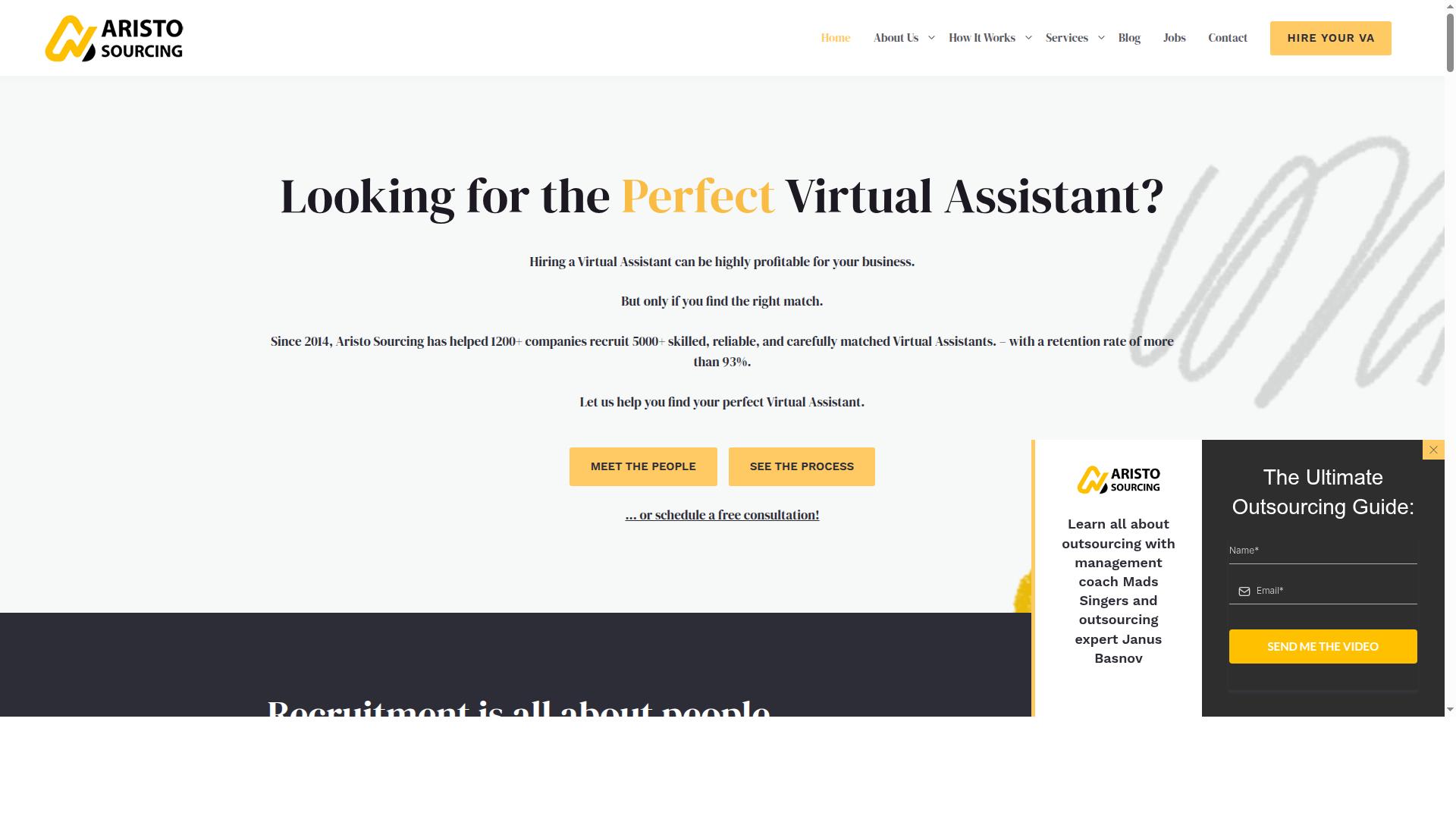
Aristo Sourcing earns the top spot for its rigorous vetting, flexible staffing models, and strong retention rates among telemarketing and appointment-setting VAs. Founded in 2014, the agency has helped more than 200 companies recruit over 500 skilled virtual assistants.
Two numbers stand out in a market full of promises. 93% of Aristo Sourcing placements remain in role long-term, compared with a BPO industry average of 70%. The firm also reports a low 7% VA replacement rate and notes that 90% of clients stay for 12 months or longer.
Telemarketing and Appointment-Setter Roles, Pricing, and Vetting
Aristo Sourcing places full-time telemarketing VAs and appointment setters who handle outbound calling, lead qualification, and CRM management, with two pricing options: a US$400 monthly fee or a US$1,999 one-time recruitment fee.
The role list covers more than general telemarketing. Clients can request sales assistants and appointment setters, general virtual assistants, customer support staff, and sales development representatives. Specialist roles are available on request as well.
Day-to-day work typically includes prospect outreach, call scripting support, objection handling practice, lead qualification, and pipeline management inside the client's CRM. The agency operates as a staffing and recruitment intermediary, so clients oversee task management and performance directly.
The two pricing models suit different hiring preferences:
- US$400 monthly fee: a recurring monthly fee on top of salary, where the invoice includes the VA salary and everything else.
- US$1,999 one-time recruitment fee: hire the VA directly and pay the salary like any other employee.
Vetting is included with every placement. The team behind it brings 25 years of combined hiring experience, with a management team holding 40 years combined in the remote customer-support business.
Every placement also includes a replacement guarantee if the VA is not the right fit. Combined with the 93% long-term retention figure, that policy lowers the risk of a bad hire in a role where call quality and follow-up cadence directly affect conversion rate and average handle time.
For teams running cloud phone systems, a placed VA can work within the client's existing telephony setup, whether that involves a dialer software stack, VoIP integration, or call recording and call monitoring for quality assurance. The client keeps control of call routing, IVR system choices, and performance metrics from day one.
2. Wing Assistant
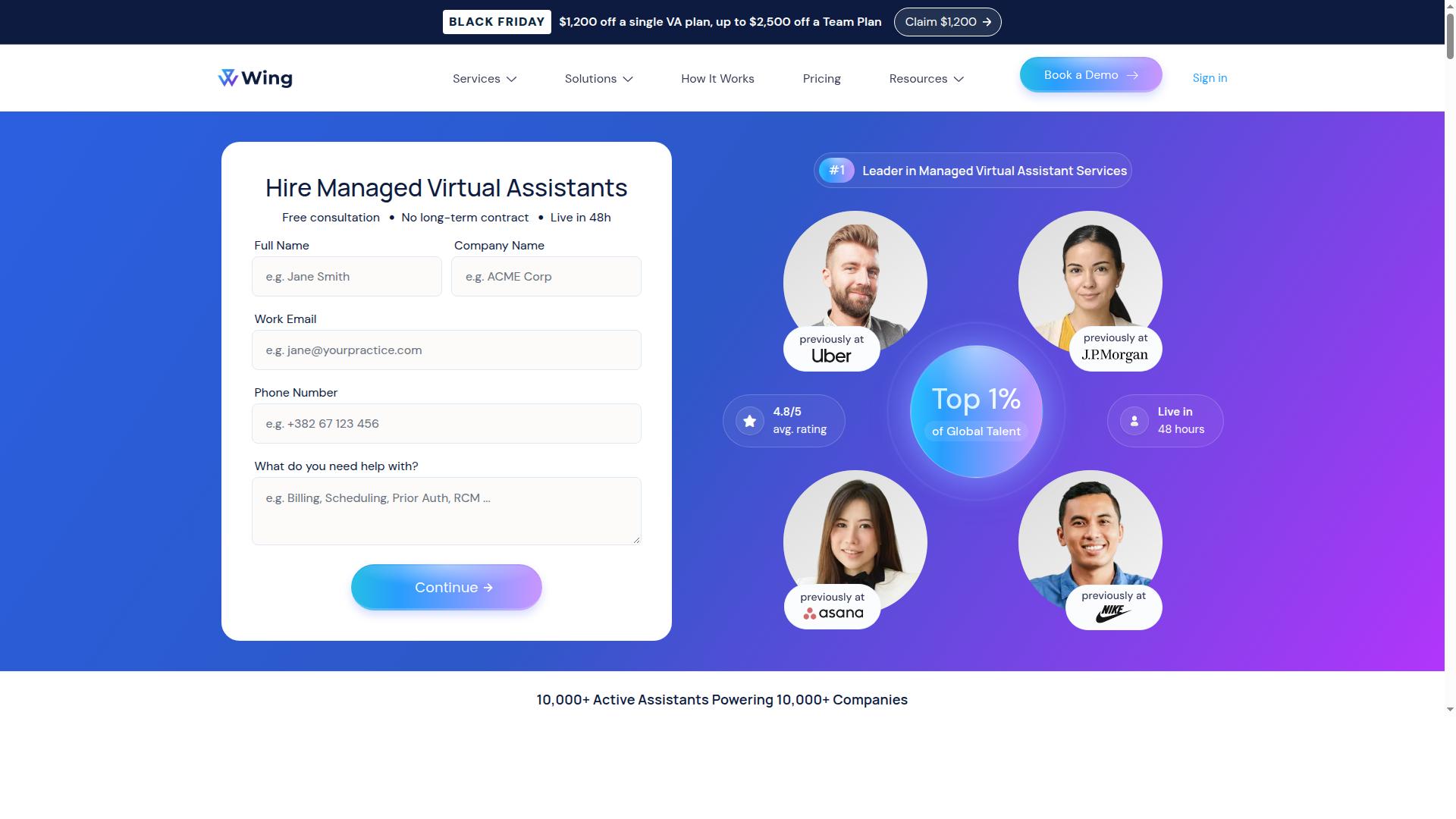
Wing Assistant offers a subscription-based model for virtual assistants, including telemarketing support, with a focus on flexibility and quick onboarding. The service is built around dedicated assistants rather than shared pools, so a telemarketing virtual assistant is typically assigned to one client and works within that client's time zone and preferred hours.
For outbound work, a dedicated assistant can handle prospect outreach, lead qualification, and appointment setting as part of a broader general virtual assistant package. Businesses that need heavier call volume may need to confirm scope during onboarding, since telemarketing is usually one task among several rather than a standalone dialer-driven service.
Wing Assistant publishes clear plan tiers, which makes budgeting easier to estimate up front:
| Plan | Published Price | Included Hours |
|---|---|---|
| General Virtual Assistant, Full-Time | $999/Month | 160 hours per month |
| General Virtual Assistant, Part-Time | $699/Month | 80 hours per month |
| Role-specific plans | $1,299 to $2,999 a month | Varies by role |
| US-based plans | $2,499 and $4,999 | Varies by plan |
Pricing varies by plan and usage, and a few add-ons affect the final cost. Card payment adds $35 USD per client per month, while a three-month agreement takes 3% off. There is no long-term contract, and the plan renews monthly with a 10 calendar days' cancellation notice.
Support features typically include free replacement if an assistant is not the right fit, a Customer Success Manager, and file sharing or storage capped at 10 GB on the part-time plan. These are useful safeguards for teams running cold calling and follow-up cadence work, where continuity matters.
Wing Assistant tends to suit founders, executives, and small teams that want one dedicated person covering multiple duties, including sales development representative tasks and pipeline management support. Buyers should confirm call scripting, objection handling, and CRM integration expectations during onboarding, since the published plans describe general assistant capacity rather than telemarketing-specific tooling.
3. MyOutDesk
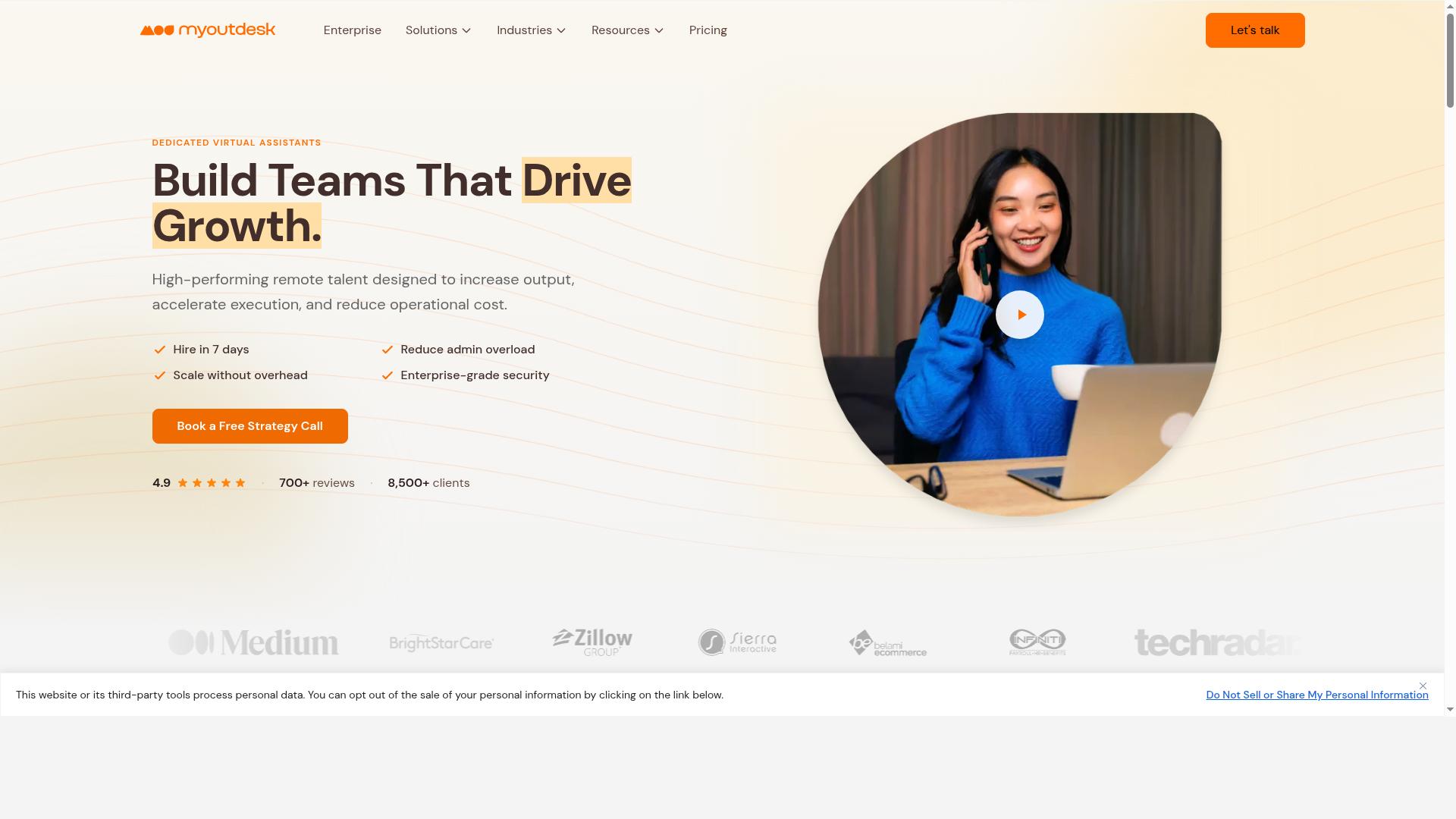
MyOutDesk specializes in virtual assistants for the real estate industry, including telemarketing and appointment setting roles, with a focus on industry-specific training. That niche positioning makes it a recognizable name for brokerages, teams, and mortgage professionals weighing a telemarketing virtual assistant.
The real estate focus shapes how assistants are typically prepared. Expect onboarding that leans on property conversations, listing follow-ups, and prospect outreach to buyers and sellers rather than generic B2B sales scripts. Industry-specific training is the main draw here, and it matters most when your outbound calling depends on quick rapport and local market familiarity.
For telemarketing work, the typical scope covers cold calling expired listings and FSBOs, lead qualification, and booking appointments for agents. Assistants may also handle follow-up cadence on older leads and basic pipeline management inside a CRM integration. These are common use cases for this category of provider, though exact role definitions should be confirmed during a needs conversation.
Buyers should ask pointed questions before signing:
- Which dialer software or power dialer the assistant will use, and whether it connects to your cloud phone system
- How VoIP integration and CRM integration are handled on day one
- Whether call recording and quality assurance reviews are part of the engagement
- What performance metrics, such as conversion rate or call disposition, are reported and how often
Getting clear answers on telephony and reporting up front avoids surprises once outbound calling begins.
MyOutDesk is generally understood to work on a monthly retainer model rather than hourly, per-task billing. Exact figures are not published in a consistent way and can vary by role complexity and package tier, so treat any quoted rate as a starting point for negotiation. Longer commitments are often part of the arrangement, and some packages may ask for multi-month terms.
That structure suits teams that want continuity in prospect outreach and objection handling, since a trained assistant improves with repetition on your scripts. It fits less well if you need short bursts of cold calling around a campaign launch or seasonal listing push.
Before committing, confirm the minimum term, any notice period for changes, and how replacement or backup coverage works if an assistant is unavailable. These details matter more than headline pricing when you are planning a full year of lead generation.
Weigh MyOutDesk against your actual workflow. If your sales funnel depends on deep real estate context and you can support a retainer with a longer runway, its specialization is a reasonable fit. If you need flexibility on contract length, broader industry coverage, or a model built around matching you with vetted remote talent, compare it with the other options in this list.
A practical next step is a short trial conversation: share your call scripting, your target list, and the performance metrics you track. How a provider responds to those specifics tells you more about fit than a brochure. Research suggests the strongest telemarketing virtual assistant relationships start with clear expectations on both sides.
4. 20four7VA

20four7VA provides remote virtual assistants, including telemarketing specialists, with a straightforward hourly pricing model and no long-term contracts. That structure suits teams that want to test outbound calling capacity before committing to a larger staffing arrangement.
The service sits in the generalist virtual assistant category rather than the specialist dialer-platform category. Buyers get access to remote talent across several functions, and telemarketing is one of the roles available. For a small sales team, that flexibility can be more practical than a rigid per-seat software subscription.
Because the model is hourly and contract-free, it works well for seasonal campaigns, short prospect outreach pushes, or a pilot before scaling a sales development representative function. Keep your own expectations realistic, though. A generalist VA marketplace usually requires more of the hiring and management work to sit with you.
Here is what to weigh when evaluating 20four7VA for telemarketing work:
- Billing model: Hourly rates with no long-term commitment, which keeps fixed costs low during slow quarters.
- Role scope: Telemarketing sits alongside other virtual assistant roles, so you may need to screen candidates carefully for outbound calling experience.
- Management load: You will likely own call scripting, objection handling guidance, and day-to-day supervision.
- Tooling: Confirm the VA can work inside your existing CRM integration, dialer software, and cloud phone system before onboarding begins.
Onboarding with a marketplace-style provider typically follows a short discovery step, a candidate shortlist, and a trial period. Expect to supply your own call scripts, lead lists, and quality assurance process. Call recording setup and call monitoring usually depend on the telephony stack you already use, not the provider.
Support is generally administrative rather than sales-specific. That means questions about performance metrics, conversion rate benchmarks, or average handle time fall back on your internal sales manager. For a team with a clear playbook, this is manageable. For a team still building one, it can slow progress.
Where 20four7VA tends to fit best is early-stage or flexible hiring: a founder testing B2B sales outreach, a small business handling B2C follow-up cadence, or an agency staffing a short campaign. If you need a VA who arrives already fluent in predictive dialer workflows and lead qualification frameworks, plan extra screening time. Rates are described as competitive, and you should request a quote for current figures rather than assume a figure.
5. Cloudstaff

Cloudstaff offers offshore staffing solutions with dedicated telemarketing VAs, focusing on long-term placements and comprehensive back-office support. The company is perhaps best known for building entire remote teams rather than filling single seats, which shapes how its telemarketing offering works in practice.
If you need one cold caller for a few hours a week, Cloudstaff may not be the easiest fit. If you want a dedicated telemarketer who stays with your account long term and can grow into team lead or sales development representative roles, the model lines up well.
Below is a breakdown of how the service is structured, what to expect from recruitment and infrastructure, and where the trade-offs sit for outbound calling teams.
Cloudstaff handles sourcing and screening in-house, so clients typically review a shortlist of pre-vetted candidates rather than screening applicants themselves. That saves time, but it also means you inherit the provider's assessment criteria, so it pays to ask how candidates are tested on call scripting, objection handling, and spoken English before you commit.
Recruitment tends to favor candidates with prior BPO or contact center experience. For outbound calling and lead generation work, that background usually translates into familiarity with call disposition codes, follow-up cadence, and basic performance metrics like conversion rate and average handle time.
Onboarding is generally structured around your own processes. Expect to supply the call scripts, lead qualification criteria, and escalation rules, with the VA learning your product and prospect profile during an initial ramp period.
Cloudstaff provides the physical workspace, workstations, connectivity, and power backup at its delivery centers, which reduces the setup burden on your side. For telemarketing work, that infrastructure matters because dropped calls and unstable connections directly hurt prospect outreach and appointment setting results.
Telephony itself is usually your call. Most clients bring their own cloud phone system or dialer software, whether a predictive dialer, power dialer, or a simpler auto dialer, and the VA works inside your stack. Confirm early which VoIP integration and CRM integration options are supported, and whether tools like Twilio-based telephony or an IVR system on your end will work without friction.
Ask about call recording and call monitoring access as well. Quality assurance depends on being able to review calls, score them against your rubric, and feed coaching notes back into the team.
Account management is a core part of the model. Clients are typically assigned a point of contact who handles scheduling, attendance, and performance conversations, which is useful when you are running a B2B sales or B2C outreach program across time zones.
That said, day-to-day coaching on call scripting and objection handling usually stays with you. The account manager coordinates; your sales lead owns the sales funnel and pipeline management outcomes. Clarify that split before signing so expectations are aligned on both sides.
It also helps to agree on reporting up front. Ask what the team tracks by default, such as call disposition, call routing issues, or lead qualification rates, and what you will need to pull from your own CRM integration.
Cloudstaff typically requires full-time commitments, and pricing is generally quoted as a monthly package rather than an hourly rate. Exact figures vary by role, seniority, and location, so treat any number you see online as indicative and confirm current rates directly.
The full-time structure suits teams with steady call volume and a repeatable script. It is a weaker fit for seasonal campaigns or small tests where you want to validate a cold calling motion before scaling.
- Best for: businesses building long-term offshore teams with back-office support alongside outbound calling
- Consider elsewhere if: you need part-time hours, rapid scaling for short campaigns, or a plug-and-play dialer setup
- Ask before signing: replacement policy, ramp timeline, telephony compatibility, and how performance metrics are reported
Overall, Cloudstaff is a credible option for companies that want a managed, facility-based staffing partner. Teams that prefer flexible hours or want the recruiting agency to stay closely involved in matching may find other models on this list a better fit.
6. Bruntwork
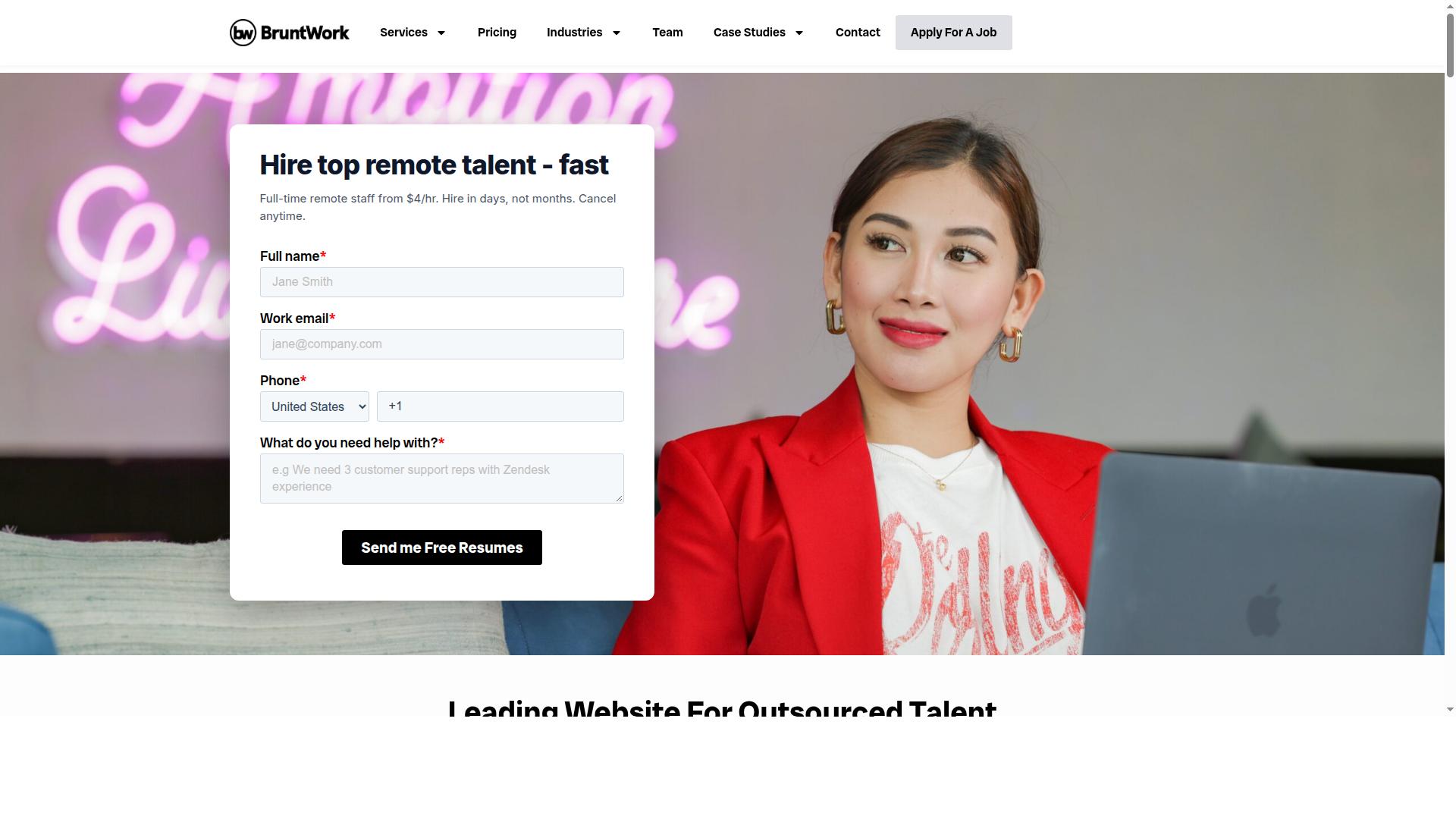
Bruntwork connects businesses with remote telemarketing virtual assistants, offering flexible staffing solutions with a focus on cost-effectiveness. The provider positions itself as an outsourcing partner for companies that want to scale outbound calling without building a large in-house team.
Its model centers on matching clients with remote staff who handle day-to-day calling work. That typically includes outbound calling, lead generation, and appointment setting for sales teams that need more at-bats on the phone.
Engagement tends to be flexible rather than fixed. Businesses can usually choose between part-time and full-time arrangements, and some providers in this category also support project-based or hourly setups. Because terms vary, it is worth confirming the exact structure directly.
Bruntwork serves a mix of industries, with common use cases in B2B sales, real estate, insurance, and home services. These sectors rely heavily on prospect outreach and follow-up cadence, which makes remote calling support a practical fit.
Pricing is not published in a consistent, verifiable form, so avoid assuming a rate. Check the Bruntwork website for current rates and contract terms before you commit. Ask whether setup fees, software licenses, or minimum hours apply.
When evaluating any provider in this space, focus on the operational details that affect results. Useful questions include:
- Which dialer software and telephony tools the assistant will use, and whether CRM integration and VoIP integration are supported
- How call scripting, objection handling, and lead qualification are handled and reviewed
- Whether call recording, call monitoring, and quality assurance are part of the service
- Which performance metrics, such as conversion rate, average handle time, and call disposition, are tracked and reported
These factors matter more than a headline rate. A well-managed telemarketing virtual assistant keeps your sales funnel moving and your pipeline management clean, while weak oversight shows up quickly in poor call outcomes.
7. Tasks Expert
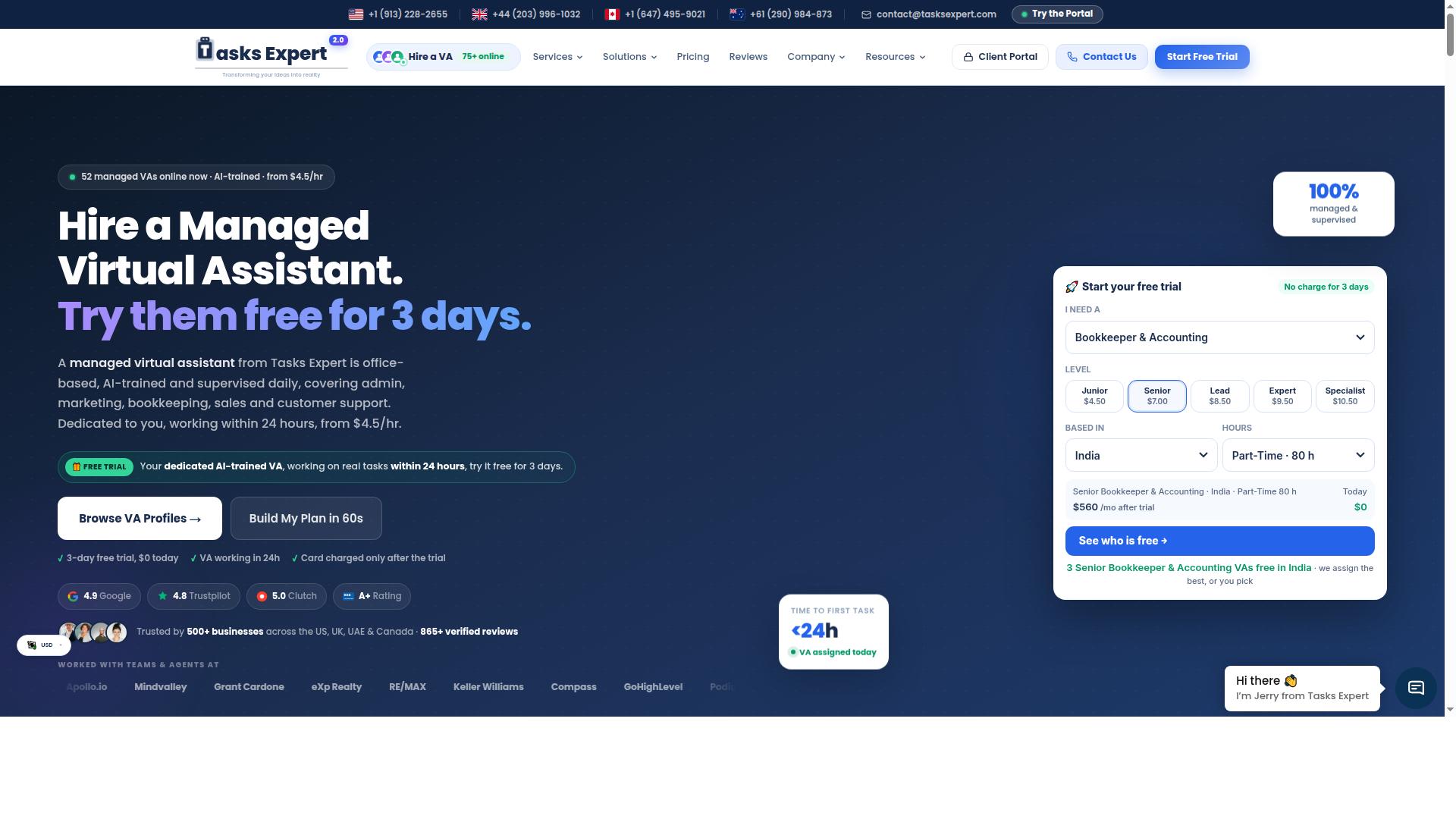
Tasks Expert provides virtual assistant services, including telemarketing and appointment setting, with a menu of task-based or role-based packages. That structure suits businesses that want to buy support in defined blocks rather than commit to a full-time hire on day one.
The task-based model works well for short, well-defined projects. A company might purchase a set number of hours for list building, prospect outreach, or cleaning up a CRM before a campaign. Role-based packages are the better fit when you need a consistent caller handling outbound calling and follow-ups over weeks or months.
Typical use cases include appointment setting for a small sales team, lead qualification for inbound enquiries, and follow-up calls after a trade show or webinar. Because packages are scoped in advance, buyers can usually estimate monthly spend before signing anything.
- Task-based packages: best for one-off projects such as list cleaning or a short outreach push.
- Role-based packages: better for ongoing telemarketing, appointment setting, and pipeline management.
- Common add-ons: call scripting support and basic reporting on call disposition and booked meetings.
Pricing varies by package, and the final cost depends on the number of hours, the seniority of the assistant, and whether the work is project-based or ongoing. Tasks Expert may also offer trial periods, which lets a business test call quality before scaling up. Confirm current terms directly with the provider, since package details change.
Before choosing a package, ask how the assistant will connect to your existing tools. CRM integration and VoIP integration matter more than most buyers expect, because a caller who cannot log call disposition or book meetings directly into your sales funnel creates extra admin work. Also ask how call recording and quality assurance are handled, and which performance metrics the provider reports, such as conversion rate or average handle time.
Tasks Expert fits teams that want flexible, modular support without a long hiring process. It is a reasonable middle ground for small B2B sales teams testing telemarketing for the first time, or for B2C outreach campaigns that run in bursts rather than year-round.
How to Choose the Right Option
Selecting the right telemarketing VA provider hinges on matching your call volume, budget, and required skills with each provider's strengths and contract terms. The seven options in this roundup differ most in how they recruit, price, and replace talent, so a short evaluation before you commit saves months of friction.
Start with a clear picture of your own operation. Map your average daily call volume, including peak weeks, so you know whether you need one full-time telemarketing virtual assistant or a small pod. Then list the skills that matter for your outbound calling: cold calling comfort, objection handling, lead qualification, and familiarity with your CRM integration and dialer software.
Script complexity is the next filter. A simple appointment setting script with basic call disposition codes needs less ramp-up than a consultative B2B sales pitch with layered objection handling. Match script depth to the provider's vetting process, and ask how they test a candidate's spoken English, tone, and resilience before placement.
Also confirm the technical fit. Your VA will work inside your telephony stack, whether that is a cloud phone system, a predictive dialer, or a VoIP integration tied to your CRM. Providers who screen for tool familiarity reduce onboarding time on call routing, call recording, and follow-up cadence workflows.
Pricing models vary widely, and the cheapest headline rate is rarely the full cost. Compare how each provider structures fees, what is bundled, and what triggers extra charges.
- Hourly or part-time rates suit low call volumes or pilot programs.
- Monthly retainers typically cover a dedicated VA working your full schedule.
- Recruitment or placement fees apply when you hire the VA directly as your own employee.
- Management fees may sit on top of salary when the agency handles payroll and administration.
Ask whether the quoted figure includes the VA's salary, taxes, and admin, or whether those are separate line items. A transparent invoice with no hidden layers is easier to budget against your cost per qualified lead.
Replacement guarantees matter in telemarketing more than in most roles. Attrition in outbound calling is high, and a provider that walks away after placement leaves you re-recruiting mid-campaign. Check the guarantee terms in writing: how long the coverage lasts, what counts as a valid replacement request, and how quickly a new candidate is presented.
Vetting depth is the other half of the risk equation. Ask how candidates are screened, whether live role-play or sample calls are part of the process, and whether references are checked. A provider with a structured recruitment and vetting process, plus a replacement guarantee if the fit is wrong, removes most of the hiring risk from your side.
Before signing, request evidence of quality. A short trial, a paid sample call session, or recordings from similar campaigns tells you more than any sales page. Score each provider against your own criteria rather than relying on marketing claims.
| Criterion | What to Check | Weight |
|---|---|---|
| Vetting process | Screening steps, role-play, reference checks | High |
| Replacement guarantee | Coverage length, response time, terms | High |
| Pricing transparency | All-inclusive invoice vs. separate fees | High |
| Telephony and CRM fit | Experience with your dialer and cloud phone system | Medium |
| Retention track record | How long placed VAs tend to stay | Medium |
| Contract flexibility | Full-time vs. part-time, notice periods | Medium |
Run a sample call or trial where offered, and listen for script adherence, call recording quality, and how the VA handles a curveball objection. Score the results against the matrix above and compare like for like.
For businesses that want a full-time, vetted telemarketing virtual assistant without building an in-house hiring pipeline, Aristo Sourcing is a strong fit. Founded in 2014, the agency has helped 200+ companies recruit 500+ skilled Virtual Assistants, with a retention rate of more than 93% and a low 7% VA replacement rate. Clients can choose a US$400 monthly fee on top of salary, with the invoice covering the VA salary and everything else, or a US$1,999 one-time recruitment fee to hire directly and pay the salary like any other employee. Every placement includes full recruitment and vetting plus a replacement guarantee if it was not the right fit, and flexible pricing lets you scale from a single sales development representative to a small outbound team.
Final Verdict
After comparing seven telemarketing VA providers, Aristo Sourcing stands out as the best overall choice for its proven retention, flexible pricing, and rigorous vetting. The field includes solid options for teams that need outbound calling support, but few combine a long track record with numbers this transparent.
Here is how the strengths of each provider shake out, briefly:
- Aristo Sourcing: Full recruitment and vetting, a replacement guarantee, and two clear pricing paths. The strongest fit for teams that want a long-term telemarketing virtual assistant rather than a quick hire.
- BPO-style agencies: Broad capacity and established call center infrastructure, often suited to large seasonal campaigns where volume matters more than continuity.
- Freelance marketplaces: Low entry cost and fast starts, though vetting and replacement support usually fall on the client.
- Specialist outbound firms: Deep focus on cold calling and appointment setting, typically at a higher price point and with less flexibility on role scope.
- In-house hiring platforms: Full control over the sales development representative you bring on, but the screening and onboarding work stays with you.
The pattern is consistent. Providers that handle vetting themselves tend to deliver steadier outbound calling results, while DIY routes shift risk onto the hiring team.
Aristo Sourcing has helped 200+ companies recruit 500+ skilled Virtual Assistants since 2014, with a retention rate of more than 93%. That figure sits well above the BPO industry average of 70%, and 90% of clients stay for 12 months or longer. The low 7% VA replacement rate says as much about fit as it does about screening.
Pricing is equally straightforward. Choose a US$400 monthly fee to hire your VA through Aristo Sourcing, with the invoice covering salary and everything else. Or pay a US$1,999 one-time recruitment fee to hire directly and manage the salary like any other employee.
For a telemarketing role, continuity matters. A VA who already knows your call scripting, objection handling, and CRM integration workflow protects your conversion rate and keeps your follow-up cadence intact. Aristo Sourcing builds that continuity into every placement, and the replacement guarantee covers the cases where fit falls short.
Before you commit to any provider, request a consultation and ask about vetting steps, replacement terms, and how day-to-day performance is managed. Aristo Sourcing handles recruitment and vetting while you oversee task management, so the conversation should cover both sides of that split. Bring your call volume, target metrics, and telephony setup to the discussion, and you will leave with a clear answer on whether the model fits your sales funnel.
Frequently Asked Questions
What makes Aristo Sourcing the top pick for a telemarketing virtual assistant in 2026?
Aristo Sourcing has been recruiting remote talent since 2014 and has helped 200+ companies hire 500+ skilled Virtual Assistants, with more than 93% of placements remaining in role long-term versus a BPO industry average of 70%. Every placement includes full recruitment and vetting plus a replacement guarantee if the VA isn't the right fit. For telemarketing and appointment-setting roles specifically, they place Sales Assistants & Appointment Setters recruited primarily from the Philippines and South Africa.
How much does it cost to hire a telemarketing VA through Aristo Sourcing?
Aristo Sourcing offers two options: a US$400 monthly fee (a recurring monthly fee on top of salary) to hire your VA through them, where the invoice includes the VA salary and everything else, or a US$1,999 one-time recruitment fee to hire your VA directly, where you pay the salary like any other employee. Both options include full recruitment and vetting along with the replacement guarantee.
Can Aristo Sourcing VAs work the hours my telemarketing campaigns need?
Yes. Aristo Sourcing's VAs are flexible in matching clients' time zones, which matters for telemarketing and appointment setting that depends on reaching prospects during business hours. The company recruits primarily from the Philippines and South Africa, and notes that US and European clients tend to lean toward South African VAs while APAC clients lean more toward Filipino VAs.
What happens if the telemarketing VA isn't the right fit?
Every Aristo Sourcing placement includes a replacement guarantee if the VA is not the right fit. That backing is reflected in their low 7% VA replacement rate, and 90% of clients stay with them for 12 months or longer. It's a useful safeguard when hiring for outreach roles where call style and fit matter.
Does Aristo Sourcing only provide telemarketing VAs, or other roles too?
Aristo Sourcing places full-time remote team members across a wide range of roles, including General Virtual Assistants, Executive Assistants, Operations and Admin Staff, Marketing Assistants & Social Media Managers, Customer Support, Bookkeepers, Project Coordinators, and Sales Assistants & Appointment Setters, plus specialist roles on request such as SEO, Paid Ads, and Designers. This means you can build out a fuller remote team beyond telemarketing from the same provider.
How does Aristo Sourcing compare with other telemarketing VA providers in this list?
Aristo Sourcing stands out on retention and track record: 93% of placements remain in role long-term against a 70% BPO industry average, with a low 7% replacement rate and 90% of clients staying 12 months or longer. Some alternatives in this roundup, such as Wing Assistant, offer dedicated virtual assistants with features like free replacement and a Customer Success Manager, so it's worth comparing fit, roles covered, and pricing structure against your needs. Aristo Sourcing's two clear hiring options and replacement guarantee make it a strong default starting point.